
Share this podcast episode:


Stay in the loop about future episodes
Listen on


Season 6 | EPISODE 9
Scandalous Grace for the Global Church
1:05:49 · November 25, 2025
The global church is exploding with growth—and at the center of it all is God’s scandalous grace. In this episode, Jim talks with Serge field worker and theologian Stephanie Black about how the gospel is transforming lives across Africa, Asia, and beyond. From contextualizing Scripture to confronting performance-driven faith, Stephanie shares how God meets people in fear, shame, and cultural complexity with a grace so shocking it feels almost unsafe—yet beautifully freeing. Come be encouraged: the Kingdom is advancing, Christ is at work, and His grace is far more powerful and global than we imagine.




The global church is exploding with growth—and at the center of it all is God’s scandalous grace. In this episode, Jim talks with Serge field worker and theologian Stephanie Black about how the gospel is transforming lives across Africa, Asia, and beyond. From contextualizing Scripture to confronting performance-driven faith, Stephanie shares how God meets people in fear, shame, and cultural complexity with a grace so shocking it feels almost unsafe—yet beautifully freeing. Come be encouraged: the Kingdom is advancing, Christ is at work, and His grace is far more powerful and global than we imagine.
In this episode, they discuss...
- T.E.A.C.H. (08:18)
- Africa as the Center of Christian Growth (18:30)
- Contextualizing Scripture (25:26)
- Idols, Food, and Hospitality (38:12)
- Tapping into Sonship: From Legalism to Radical Grace (45:20)
- Supremacy and Sufficiency (53:40)
Thank you for listening! If you found this conversation encouraging or helpful, please share this episode with your friends and loved ones. Or please leave us a review—it really helps!
Referenced in the episode...
- Learn more about Theologianswithoutborders.org
- Donate to Serge’s End of Year Matching Gift Campaign
- Opt in for Serge’s Advent devotionals
- Study the Cross Chart
- Read 𝘛𝘩𝘦 𝘍𝘰𝘶𝘳 𝘗𝘢𝘨𝘦𝘴 𝘰𝘧 𝘵𝘩𝘦 𝘚𝘦𝘳𝘮𝘰𝘯: 𝘈 𝘎𝘶𝘪𝘥𝘦 𝘵𝘰 𝘉𝘪𝘣𝘭𝘪𝘤𝘢𝘭 𝘗𝘳𝘦𝘢𝘤𝘩𝘪𝘯𝘨, 𝘔𝘪𝘴𝘳𝘦𝘢𝘥𝘪𝘯𝘨 𝘚𝘤𝘳𝘪𝘱𝘵𝘶𝘳𝘦 𝘸𝘪𝘵𝘩 𝘞𝘦𝘴𝘵𝘦𝘳𝘯 𝘌𝘺𝘦𝘴, 𝘛𝘩𝘦 𝘗𝘳𝘰𝘥𝘪𝘨𝘢𝘭 𝘎𝘰𝘥, 𝘊𝘩𝘳𝘪𝘴𝘵-𝘊𝘦𝘯𝘵𝘦𝘳𝘦𝘥 𝘗𝘳𝘦𝘢𝘤𝘩𝘪𝘯𝘨: 𝘙𝘦𝘥𝘦𝘦𝘮𝘪𝘯𝘨 𝘵𝘩𝘦 𝘌𝘹𝘱𝘰𝘴𝘪𝘵𝘰𝘳𝘺 𝘚𝘦𝘳𝘮𝘰𝘯, 𝘗𝘰𝘸𝘦𝘳𝘴, 𝘗𝘳𝘪𝘯𝘤𝘪𝘱𝘢𝘭𝘪𝘵𝘪𝘦𝘴, 𝘢𝘯𝘥 𝘵𝘩𝘦 𝘚𝘱𝘪𝘳𝘪𝘵: 𝘉𝘪𝘣𝘭𝘪𝘤𝘢𝘭 𝘙𝘦𝘢𝘭𝘪𝘴𝘮 𝘪𝘯 𝘈𝘧𝘳𝘪𝘤𝘢 𝘢𝘯𝘥 𝘵𝘩𝘦 𝘞𝘦𝘴𝘵, 𝘈𝘨𝘢𝘪𝘯𝘴𝘵 𝘗𝘳𝘪𝘯𝘤𝘪𝘱𝘢𝘭𝘪𝘵𝘪𝘦𝘴 𝘢𝘯𝘥 𝘗𝘰𝘸𝘦𝘳𝘴: 𝘚𝘱𝘪𝘳𝘪𝘵𝘶𝘢𝘭 𝘉𝘦𝘪𝘯𝘨𝘴 𝘪𝘯 𝘙𝘦𝘭𝘢𝘵𝘪𝘰𝘯 𝘵𝘰 𝘊𝘰𝘮𝘮𝘶𝘯𝘢𝘭 𝘐𝘥𝘦𝘯𝘵𝘪𝘵𝘺 𝘢𝘯𝘥 𝘵𝘩𝘦 𝘔𝘰𝘳𝘢𝘭 𝘋𝘪𝘴𝘤𝘰𝘶𝘳𝘴𝘦 𝘰𝘧 𝘌𝘱𝘩𝘦𝘴𝘪𝘢𝘯𝘴
- Watch Stephanie’s webinar Seeking God When Your Life Falls Apart
- Bible references: Colossians 1-2, Matthew 21-22, Romans 7, Luke 10:38-42, Luke 15, Luke 7:18-35
Credits
Our guest for this episode was Stephanie Black, a Serge missionary seminary professor who’s spent much of her adult life as a “global nomad,” serving the Lord and His church in Europe, Africa, Asia, and the US. She’s also an Affiliate Associate Professor of NT at Fuller Theological Seminary and the Associate Director for Orientation and Training with Theologians Without Borders. This episode was hosted by Jim Lovelady. Production by Evan Mader, Anna Madsen, and Grace Chang. Music by Tommy L.
𝑮𝒓𝒂𝒄𝒆 𝒂𝒕 𝒕𝒉𝒆 𝑭𝒓𝒂𝒚 𝑷𝒐𝒅𝒄𝒂𝒔𝒕 is produced by SERGE, an international missions agency that sends and cares for missionaries and develops gospel-centered programs and resources for ongoing spiritual renewal. Learn more and get involved at serge.org.
Connect with us!
Get in touch:
Questions or comments? Feel free to reach out to Serge’s Renewal Team anytime at podcast@serge.org
[music]
Welcome to Grace at the Fray, a podcast that explores the many dimensions of God’s grace that we find at the frayed edges of life. Come explore how God’s grace works to renew your life and send you on mission in His Kingdom.
[music]
0:00:22.8 Jim Lovelady: Hello, beloved. Welcome to Grace at the Fray. Thanks for joining us. Do you know where in the world the church is growing the fastest? By far, it’s sub-Saharan Africa. I think this is fascinating, it’s encouraging, and it’s humbling. Now, you may feel a bit discouraged at the state of the church in your zip code, but in this episode, I want to give you a glimpse into how the global church is doing. Alright. Maybe even better than you think. In fact, this episode is an invitation to look past your zip code and see that God is growing His church and it’s thriving and the gates of hell will not prevail against the power of God’s church and the glory of His grace. My guest today is Stephanie Black. She is a Serge field worker located in Nairobi, Kenya, where she works in the realm of theological education for leaders, mostly in Africa and Asia, but really all around the world. So she has a global perspective that is… That’s really encouraging. Stephanie’s amazing, and I want to give you an opportunity to get to know her beyond even this episode. So I’ll tell you right now, she did a webinar with us a few years ago called Seeking God When Life Falls Apart, where she tells more of her personal story. I’ll have a link for that in the show notes. But in this conversation today, she gives us a glimpse into her work of contextualizing the gospel for the students that she is preparing for leadership in the global church. This is such an encouraging conversation. The Lord is working, the Spirit is moving, the church is growing. People are experiencing God’s grace. And the effect of this episode, I hope, should be humility. When you see the gospel hit differently for someone in a different culture, it humbles you. When you realize that the Lord is building His Kingdom and He doesn’t need you, it humbles you. And when you realize that even though He doesn’t need you, but He invites you to participate with Him, man, it humbles you. And humility actually gives you courage, courage to envision the Kingdom coming in your zip code. What is more, humility even it leaves room for joy. Humility leaves room for patience. Humility leaves room for God to do His work in you, in your neighborhood, and the entire world. So join Stephanie and me as we explore God’s scandalous grace for the global church.
0:02:54.0 Jim Lovelady:Well, Stephanie Black, welcome to Grace at the Fray.
0:02:56.9 Stephanie Black: Thanks. I’m very happy to be here.
0:02:58.3 Jim Lovelady: Yeah. I’m so glad that you are in the States, ’cause I’ve wanted to sit down with you for a long time. How long have you been in the States?
0:03:04.7 Stephanie Black: About a month. I live in Nairobi, as you know, and I’m just here for four months regularly, sort of every four years. Go visit all the partners.
0:03:11.3 Jim Lovelady: Right, right. So you’re here but you’re living in Richmond while you’re here, right?
0:03:16.5 Stephanie Black: Richmond, Virginia, yeah, I have a house in Richmond.
0:03:17.8 Jim Lovelady: Okay.
0:03:18.2 Stephanie Black: Yeah.
0:03:18.9 Jim Lovelady: Yeah. Well, so thanks for coming to Philly.
0:03:20.2 Stephanie Black: Yeah, no problem, I came up on the Amtrak, love the train.
0:03:23.2 Jim Lovelady: Man, everyone talks about how convenient and cheap.
0:03:27.7 Stephanie Black: Yes. It’s like $100 round trip. I couldn’t drive it for that.
0:03:32.2 Jim Lovelady: Yeah, the toll road and the traffic.
0:03:35.1 Stephanie Black: And the gas and everything and so. And yeah, and I can just park my car near my house and get on. I got to doze. I read a novel instead of driving.
0:03:42.8 Jim Lovelady: Well, I mean, I read a novel one time while driving from Richmond. [laughter] No, not really.
0:03:48.5 Stephanie Black: Not really.
0:03:49.8 Jim Lovelady: Not, just kidding.
0:03:50.7 Stephanie Black: Just kidding. But anyway, it’s a four and a half hour trip. It’s fabulous.
0:03:53.0 Jim Lovelady: Nice. And you’re here just for a couple days. During…
0:03:55.0 Stephanie Black: Just for a couple days.
0:03:56.1 Jim Lovelady: During Launch Week. How’s it been?
0:03:57.7 Stephanie Black: Oh, it’s been great. Do you know I have not been back to the Serge office in 10 years.
[laughter]
0:04:02.6 Jim Lovelady: Welcome back.
0:04:03.2 Stephanie Black: In person since my own orientation week. And I’m like, I just need to come and pick up a little of the water cooler chat and remember who people are and that sort of thing. So I’m just hanging around for a few days.
0:04:13.7 Jim Lovelady: Oh, I love it. I love it. So how’s Nairobi?
0:04:16.1 Stephanie Black: Nairobi is fabulous.
0:04:17.7 Jim Lovelady: It’s been about a year since I was there. Two years.
0:04:20.5 Stephanie Black: Were you? So I lived in Nairobi once before, 2008 to 2013. I was with another organization at the time, and then I’ve been various places and I had a chance to go back to Nairobi about three years ago and I took it. And for me it’s very redemptive just to be back there. There were some difficult family things that had gone on before. So to be back there in a very healthy and spiritually wholesome state feels really good. I love my little team there. I have this Serge team. They’re all my kids’ ages and we have about…They have about a million children.
0:04:53.5 Jim Lovelady: Yeah, that’s right.
0:04:54.5 Stephanie Black: Yeah. So no, I have a great team.
0:04:55.9 Jim Lovelady: Oh yeah. The Nairobi team. I guess teams, right?
0:04:58.7 Stephanie Black: There are. There are two and a third launching in Nairobi, and then we have at least three other upcountry teams. But anyway, I’m with one where we’re kind of a typical capital city team in that we don’t work on the same things. We all work in different directions.
0:05:12.5 Jim Lovelady: Right.
0:05:13.2 Stephanie Black: So our actual reason to be a team is to build that fellowship according to the Serge ethos. I try to explain to people when I’m trying to explain about Serge, I say, Serge says… They send us out in teams, never alone, because if you guys… If you sinners can manage to get along, we may, repeat, may have a message to share with the world.
0:05:33.2 Jim Lovelady: That’s right. That’s right.
0:05:34.2 Stephanie Black: And that’s very much part of Serge’s ethos. And it’s built into our job description to spend time together, to deal with conflicts as they come up, to spur each other on to love and good works. So it’s one of the things I truly love about Serge. Yeah, I’ve been with other organizations. I’ve always known about Serge. I came into Serge about 10 years ago, and you always wonder if it’s going to be as good on the inside as it looked on the outside. But I have certainly found it, so.
0:06:00.3 Jim Lovelady: Oh, I love to hear that. I was a missionary with a different organization. That was great.
0:06:04.8 Stephanie Black: Yeah. My other one was fine.
0:06:05.9 Jim Lovelady: While I was over there, I met Serge missionaries, and I was like, hey, I want to hang out with you. And I mean, that was 20 years ago. The rest is history. And it really is cool to hear other people kind of affirm that thing of like, hey, I was with this other organization. That was fine. It was great.
0:06:23.1 Stephanie Black: Yeah.
0:06:23.6 Jim Lovelady: Then I came over here, and it’s like, oh, these are my people. You guys have a certain winsome way about you that is delightful. And it draws out Christ likeness in one another.
0:06:39.5 Stephanie Black: And I found that at this stage of my life, that’s really what I was interested in, was that ethos of being transparent before God and each other. I was 55 when I came into Serge. I’d already had a lot of career. I didn’t need structure. I didn’t need career building. What I really was in is sort of this third age of life where it’s all about just a more sense of transcendence. And I feel like I get that in Serge, even though that’s not all that Serge is. There’s a lot of good structure and content. But for me, it’s been the right place at the right stage of life.
0:07:10.4 Jim Lovelady: Oh, that’s fantastic.
0:07:11.5 Stephanie Black: Yeah.
0:07:11.8 Jim Lovelady: We are still bringing missionaries into the organization who are in that third stage of life.
0:07:18.2 Stephanie Black: Yeah.
0:07:18.7 Jim Lovelady: And I love that.
0:07:20.0 Stephanie Black: Yeah.
0:07:20.4 Jim Lovelady: We’re trying to… We’re trying to bring in more Gen Z, of course.
0:07:23.4 Stephanie Black: Yeah.
0:07:23.7 Jim Lovelady: Millennials, of course. Gen X, of course. Oh, hey, don’t forget about… Well, I don’t know where third stage starts.
0:07:31.2 Stephanie Black: Whatever.
0:07:32.7 Jim Lovelady: But. Yeah, hey, anybody, if you feel like you’re called.
0:07:34.9 Stephanie Black: Yeah.
0:07:35.5 Jim Lovelady: Come on.
0:07:35.9 Stephanie Black: Although I will say what I find really fun about Serge is how young it skews compared to other organizations and compared to the mainline church as well that I grew up in. So, like I said, my team members are all way, way young. We were at a conference center in Nairobi for retreat team day, something, I don’t know, a couple years ago, and I looked at one of my team members and said, now tell me what year you were born again. And she told me, I said, do you realize the first time I was right here, you were not born for another seven years. [laughter] That is how old I am.
0:08:04.9 Jim Lovelady: Right.
0:08:05.2 Stephanie Black: I said, I don’t think they kind of actually get the scale of it. [chuckle]
0:08:08.5 Jim Lovelady: Right. Well, they don’t perceive that at all. We don’t perceive that.
0:08:12.0 Stephanie Black: No. No.
0:08:12.3 Jim Lovelady: Energy is energy.
0:08:13.9 Stephanie Black: Yeah. Yeah. Yeah. Yeah.
0:08:15.0 Jim Lovelady: So, what are you up to in Nairobi? Talk to me about your work.
0:08:17.6 Stephanie Black: Yeah. So my title is Theological Education Specialist, which is intentionally vague. What that really is is a big empty cardboard box to put lots of projects that have to do with global theological, evangelical, graduate level education in. Does that make sense? Is that too many adjectives? I actually often use the acronym TEACH for my work. T-E-A-C-H. So I TEACH short term in various places. I used to be resident faculty in Ethiopia and Nairobi and India. But I always say, and I’m old, I get to be a consultant. And I don’t mind the gray hair. It actually works to your advantage in Africa. So I let it go.
0:08:56.9 Jim Lovelady: Is there an honor?
0:08:57.9 Stephanie Black: Oh, my gosh.
0:08:58.7 Jim Lovelady: Yeah. Yeah. Yeah.
0:08:59.6 Stephanie Black: So being old is good in my world. Or older.
0:09:02.5 Jim Lovelady: What about being bald?
0:09:03.7 Stephanie Black: [laughter] I don’t know. Well, it would have to be the beard. You might powder the beard. Powder the beard.
0:09:08.4 Jim Lovelady: Okay. So it’s the gray. It’s the silver.
0:09:11.3 Stephanie Black: It’s the gray. Yes, yes. That’s all good where I live, anyway, so T… Now teach short term in a number of environments. Sometimes that is in person, sometimes that’s online. I’m affiliate faculty at Fuller Theological Seminary. A couple courses for them a year. But I travel and teach to various seminaries in Africa and Asia. I’ve been doing it for 25 years. So a lot of times what’s happening is my former students are now the deans and institutional presidents who are inviting me to come and do things. I love that. Equipping means working with theological institutions, basically seminaries in various ways. Years ago, I worked with the Association of Evangelical in Africa’s Theological Education Agency. I was the continental… I was the accreditation officer for the whole continent. Which someone described as fulfilling my need to be in charge of everyone.
0:10:00.0 Jim Lovelady: [laughter] You’re in, you’re not in.
0:10:01.5 Stephanie Black: Yeah, yeah, it’s great, you jump, how high? So I still do a lot of projects for them. It may be a leading an accreditation team to somewhere, I did that in April in Nigeria with a group of professionals from within Nigeria to another school. It may be in July. This organization has a… It’s called ACTE and they have an ACTE women’s thread within that. And so I was at a conference for African women in evangelical institutions who are kind of mid-career academics and we were teaching them to write for publication internationally.
0:10:33.9 Jim Lovelady: Oh, nice.
0:10:34.4 Stephanie Black: Yeah, so it could be anything like that. That’s the equipping side. A is advising. And that’s all the people like you or other people who are like, tell me what’s going on in Africa and how I can help. Because fortunately, a lot of people are good at doing some research before they launch a project. And so they are correct, they should be talking to people like me, other people as well. And then connecting is kind of the same thing on the other side. It’s all the people in the majority world who are doing things and I help them find the other people. So for example, on that one, I was at the Lausanne World Conference in Seoul last year. And a guy came up to talk to me. He had been sent, somebody else had said, oh, you need to talk to this guy. He’s Brazilian, Portuguese speaking, but had been sent to be the president of a small reformed seminary in Rwanda, which is French speaking. And he’s like, I’m just not really sure what I’m doing here. What can you do? [laughter]. And I’m like, well, here’s three different people you should talk to. Here’s somebody who’s the dean of the Portuguese speaking seminary in the next country. And here’s somebody in America who’s a specialist in African theological education, but also focuses on Lusophone, we call it Portuguese-speaking. And here’s somebody else in Rwanda that’s doing some similar things to what you’re doing. And here’s their numbers. And I’m going to send them some texts and tell them to expect to hear from you. And he looks at me and goes, how long have you been doing this? And I’m like a real…
[overlapping conversation]
0:11:57.5 Jim Lovelady: A long time.
0:11:57.6 Stephanie Black: A long time. [laughter]
0:11:59.0 Jim Lovelady: I love that.
0:11:59.9 Stephanie Black: But so that’s what just the longevity allows me to do. So T for teach, E for equip, A for advise, C for connect, and then H is for host hosting short-termers. And I largely do that through my work with a group called Theologians Without Borders. So we’re kind of the fair trade brokers for short term partnerships for… This is within the evangelical world. It goes up through a couple organizations to the World Evangelical Alliance, but just to position it there. But anyway, we’re the short term, fair trade brokers for short-term partnerships between majority world seminaries and other people that are helping them in smaller ways. Lots of it’s been big the last, I don’t know what, five, 10 years. Everybody in the West wants to have a global footprint, which is good. But that also means the Westerners, and let’s call that Americans, show up with lots of money and lots of ideas and our very polite and very needy maturity world partners, don’t feel like they’re in a position to say, no, or hold on, or let’s do it a different way. So we do a lot with that. What I do mostly is to help place visiting faculty in those majority world seminaries. And again, we only do PhD at a Master’s level. So if you have anybody listening who has a PhD who would love to do a short term, and it could be online as well as in person, but a short-term stint teaching in a majority world seminary. Tell them to contact me, and I’m sure you have the information all there.
0:13:20.5 Jim Lovelady: If it was in person, where would it be?
0:13:22.0 Stephanie Black: Oh my gosh, it could be anywhere in Africa, it could be India. We sent people to Nepal, we sent people to Indonesia. I’m trying to think where else, but those kind of places. Yeah.
0:13:30.5 Jim Lovelady: That’s awesome.
0:13:31.9 Stephanie Black: Yeah. And the way it works is the visiting scholar pays their airfare, their transportation to get there, and the receiving institution provides room and board while they’re there.
0:13:40.7 Jim Lovelady: Nice.
0:13:41.2 Stephanie Black: Yeah. So usually you’re living on campus or somewhere nearby, so it’s a great immersion. It’s also great, let me say, for those who are, and I’m speaking to your audience now, doing PhDs but haven’t finished their thesis yet, what we might… In the US we call it ABD, but we don’t call it that anywhere else. But we will accept you to come and get teaching experience if you’re trying to build your CV at this point. The group is called Theologians Without Borders, theologianswithoutborders.org. Now, what I was going to say is I am the associate director for orientation and training. That means anyone who comes through. I put them through a couple of modules. One on general intercultural relationships and one on intercultural aspects of teaching and learning, classroom expectations and behavior, which I refer to as my revenge for the people [laughter] I have been on the receiving end of who should have had that.
0:14:28.4 Jim Lovelady: Oh, yeah.
0:14:29.2 Stephanie Black: So, yeah, so I have to sign off on you before you’re allowed to go with our brand on you. But it’s been great. It’s been a win-win. We have so many people have enjoyed the opportunity to engage that way. Pastors who have PhDs, but they don’t get to teach. We have a lot of them who will come either for a sabbatical time, couple weeks, or will teach online. And then other faculty people, like I say, people who are working on their PhD who want some broadening of experience. Lithuania. Did we send someone? We sent someone in? No, he ended up going somewhere else after that, but. Yeah.
0:14:59.0 Jim Lovelady: Lithuania. Someday.
0:14:59.9 Stephanie Black: Someday.
0:15:00.7 Jim Lovelady: I don’t know exactly, the exact data, but my impression is that when you look at the seminaries in the United States and the PhD students, that are coming out of those seminaries, that they’re having a hard time finding a job in the United States.
0:15:19.7 Stephanie Black: Absolutely.
0:15:20.3 Jim Lovelady: Just kind of maxed out. But then when you look at the rest of the world, it’s like, oh, my goodness, there is… there are so many opportunities.
0:15:28.7 Stephanie Black: I go to the big conferences, ETS, SPL, those are the big, people like, oh, no, there are just so many places. I’m like, there are hundreds, thousands of places. What people don’t want to do is they don’t want to raise missionary support to do it. And I understand that can be a mental emotional barrier for people. But if you can set that aside, you can have the most incredible career you can ever imagine. I love my job. I don’t have to do administrative committees. I don’t have to do institutional politics. Now, I have done that when I’ve been full-time in certain places.
0:16:00.5 Jim Lovelady: You have had to, you know, how to navigate those, but.
0:16:02.2 Stephanie Black: I can do it. But at this point, as I’m doing a lot of short term…
0:16:05.3 Jim Lovelady: Why would I do that?
0:16:06.5 Stephanie Black: Yes, yes. I’ve had several times from the US, invitations to come and be part of other seminaries and other projects. And I’m thinking, you have no idea. You have no idea where I live in the tropics and what I do. So, yes.
0:16:23.3 Jim Lovelady: You and I have been talking, and you sent me this email because I was like, hey, I would love to sit you down in the studio and just let you go. And I was like, what do you want to talk about? And this is what you wrote. I’m just going to read it, and then let you just dance around this because this paragraph is so loaded with some glorious things that I want you to unpack so, what I’m passionate about is training next gen church leadership in Africa and Asia, since Christianity is growing there so phenomenally much faster than in the West. I only do masters and PhD levels, so most of my students are very “churched” and are sent by denominations, organizations, seminaries for next level training. Because they’re so churched, they often come with a somewhat legalistic or denominationally dogmatic understanding of Christian faith. We spend a lot of time reading the New Testament closely together. And I use a lot of Sonship approaches in my teaching to help them rediscover radical grace, which, by the way, I also do with my Fuller students because a lot of them have little biblical or theological literacy.
0:17:29.0 Jim Lovelady: For many of them, most of what they know they got from worship songs, which [chuckle] I’m a worship pastor, so I chuckle.
0:17:35.5 Stephanie Black: I’ve had students actually say that to me.
0:17:36.6 Jim Lovelady: Not cynically, not cynically, but yeah, yeah. I’d love to talk about the rapid growth of the church in Africa and Asia. The strategic leadership roles many of my former students are in now. And yet how preaching the gospel to themselves, “preaching the gospel to themselves is still a daily need for these emerging leaders.” All right, that’s so good. Let’s start with the state of the growth of the African and Asian churches rapidly growing.
0:18:04.3 Stephanie Black: Yes. So we have already. And this is Pew research data, most of it, research center data. Some of it’s coming out of Gordon-Conwell and their center for the Study of Global Christianity. We have already passed the tipping point where Africa, and I’m going to talk most about Africa because that’s where I live and do most of my work. But these trends are also true of Asia.
0:18:26.0 Jim Lovelady: Yeah. That you’ve seen firsthand.
0:18:27.4 Stephanie Black: Absolutely. Africa now has the largest concentration of Christians anywhere on the planet as of about 2018. So we’re talking 600 million plus. They tipped more than Latin America at that point. And this is an exponentially growing trajectory. So if you look back in about 1900, of course, three quarters of the world’s known Christian would have been in Europe and North America, and maybe roughly less than 2% in Africa. But if you jump ahead to 2010, then you’ve got… It’s interesting because the US has a smaller percentage, but not a lot. They go from about 14 to about 12, whereas Europe goes from a big amount to. They go down less than half, but Africa increases by about 15 times. So you go from 1.6 something, 8% of the world’s Christians to 20 something of the world’s Christians, percent of the world’s Christians. So it’s a very fast thing. Now, of course, you’ve also got explosive population growth, which is playing into that as well.
0:19:35.9 Jim Lovelady: That’s okay.
0:19:36.6 Stephanie Black: We’re okay with that. So 2018 was the tipping point for sheer numbers. Pew Research center recently said that by 2060, so 35 years, one generation from now, 40% of the world’s Christians will live in Africa.
0:19:51.8 Jim Lovelady: Interesting.
0:19:53.0 Stephanie Black: 40% of the world’s Christians will live in Africa. So those are the children of the people that I’m teaching now, essentially. Yes. So we’ve got this explosive growth. When I’m in America, people can sometimes feel sad, a little defeated that they remember Christianity as being a major cultural movement.
0:20:11.7 Jim Lovelady: Yeah, yeah, yeah.
0:20:12.4 Stephanie Black: And they can be discouraged if they don’t see that. Now, I will say, the data… The stats which you’ve probably explored show that there’s been a tiny uptick in the last couple years of church attendance, particularly with young men, which I find really interesting. But in general, we’ve experienced that, that cultural downtrend. And so it leaves people with a sense that the gospel isn’t as powerful or whatever. And I’m like, no, I just want you to know that the Kingdom of God is growing exponentially. The church is becoming more and more present, just possibly not in your zip code.
0:20:44.8 Jim Lovelady: Right, right.
0:20:46.0 Stephanie Black: Yes. So that’s what’s going on. So you can imagine with all those Christians, who is teaching, leading, training them? So the statistics again, suggest that this is global, but it also tracks for US, I mean, for Africa, between 80 and 90% of churches are led by people with no—with zero theological training.
0:21:06.7 Jim Lovelady: 80.
0:21:07.3 Stephanie Black: Between 80 and 90%.
0:21:09.8 Jim Lovelady: Wow.
0:21:10.3 Stephanie Black: Of churches in Africa, also in Asia.
0:21:12.7 Jim Lovelady: So some guy who picks up a Bible, maybe. Maybe not even picks up a Bible, but some guy who–
0:21:21.0 Stephanie Black: Who’s been listening to worship songs. [chuckle]
0:21:22.3 Jim Lovelady: Yeah, yeah. And clearly, hopefully, is walking in the Spirit, and the community goes, hey, you are walking in the Spirit. And every time you speak it seems to be Spirit filled, put you in charge. And he’s like, oh no, I don’t know what to talk about.
0:21:36.5 Stephanie Black: Yeah, that’s the best case scenario. And we do see a lot of it. I mean, you do not have to be formally trained to be someone who can teach God’s word where there are a lot of self taught people out there. On the other hand, we do have…
0:21:46.7 Jim Lovelady: Worst-case scenarios too. [laughter]
0:21:47.9 Stephanie Black: The worst-case scenario is what we call tithe farming where someone sets themselves up.
0:21:53.1 Jim Lovelady: Oh gosh. Okay.
0:21:53.7 Stephanie Black: And, usually in a small rural church and then is, is really just there to, create an income stream for themselves. But I don’t want to say that’s all of it.
0:22:04.2 Jim Lovelady: Right.
[overlapping conversation]
0:22:05.2 Stephanie Black: There are very good, very good, environments. And the thing is the people who are in the best-case scenarios, they’re the ones who are craving most the theological training. So, we talk about, in education, we talk about formal and non-formal education. Formal being, coming up through organized schools and taking degrees and the whole thing and non-formal being certificate or, just here I’ll teach you how to do something you need to know for now. Both are outrageously important, particularly in Africa right now. We need both and we need more of it. And even like we say that that person who has no training, who’s been put into a leadership role, they’re the first ones to sign up. Particularly for these non-formal local things. I mean, no one doesn’t want more training. We are teaching… We are selling hammers to carpenters, basically. I mean, people are looking for this.
0:22:58.9 Jim Lovelady: Yeah, yeah.
0:23:00.7 Stephanie Black: So I happen to work on the formal end. I do PhD and master’s students. That’s okay. That doesn’t need to be even the most of what we do, but we definitely need to be training some of these people at the highest level who have the capacity to do that and have been identified as influencers in their realm. Then they write the books, they become the trainers of trainers of trainers. So that’s my small spot. It happens to be at the top of that, if we might say pyramid, but the broader base of the pyramid, that non-formal training is probably what we need more of.
[music]
0:23:34.9 Jim Lovelady: I want to pause this conversation and invite you to join us in prayer for the Serge field workers that we here at the headquarters in Philadelphia are praying for each week. We gather on Tuesday and Friday mornings to pray, and this week we’re praying for our teams in Kenya. Would you pray with me? Lord, we pray that You would bless these folks. Give them joy in their work in Your Kingdom, and the pleasure of Your joy as they follow you. Give them wisdom and let Your grace abound in their relationships with one another, with family members and children, and with the people they serve. Heal all sicknesses, liberate the enslaved, protect them from the powers and principalities of darkness, and restore to them the joy of Your salvation. And let Your Kingdom come and Your will be done in these places, just as it is in heaven. We pray in Your name. Amen. Now back to the conversation.
0:24:25.3 Jim Lovelady: So what are you experiencing as you’re talking to these students, these PhD… masters and PhD students who are coming from these various places with a certain amount of, well, Christian experience, whether or not it’s professional or formal theological training.
0:24:49.8 Stephanie Black: Right.
0:24:50.3 Jim Lovelady: But they’re definitely coming having been churched.
0:24:53.4 Stephanie Black: Yes.
0:24:53.8 Jim Lovelady: So what is that? What’s it like?
0:24:55.3 Stephanie Black: Well, the first thing is that we do is we, I’m a New Testament scholar, essentially. I mentioned to you earlier, my PhD is in New Testament Greek, grammar and linguistics.
0:25:03.0 Jim Lovelady: What’s the Greek word for the day?
0:25:04.9 Stephanie Black: [laughter] I don’t have one.
0:25:06.0 Jim Lovelady: I went to my… I have a little Greek app.
0:25:07.6 Stephanie Black: Do you?
0:25:08.7 Jim Lovelady: It’s like, hey, stay fresh on your Greek.
0:25:10.8 Stephanie Black: I don’t have a Greek app.
0:25:11.8 Jim Lovelady: You know Greek?
0:25:13.7 Stephanie Black: I don’t need one. Yes.
0:25:13.9 Jim Lovelady: You don’t need it. I do.
0:25:15.3 Stephanie Black: Okay. [laughter]
0:25:16.1 Jim Lovelady: And I definitely need the Hebrew app.
0:25:18.5 Stephanie Black: Well, I kind of would need the Hebrew app, too. I empathize with people’s struggles with Greek because I know my own struggles with Hebrew.
0:25:23.9 Jim Lovelady: I was way better with Greek than Hebrew. Hebrew was like, I’ve never worked so hard at something and failed so miserably in my life.
0:25:30.2 Stephanie Black: Yeah. Everybody tends to like one or the other because they work very differently.
0:25:33.0 Jim Lovelady: Well, I loved the idea of Hebrew. It just didn’t fix. All I… What I learned in seminary about Hebrew is how to pronounce all the names in the Bible. That’s all I got.
0:25:43.5 Stephanie Black: Helpful.
0:25:44.5 Jim Lovelady: Which is kind of funny because we’re still speculative about how to pronounce.
0:25:47.7 Stephanie Black: Yes.
0:25:48.0 Jim Lovelady: Anyway, so.
0:25:48.6 Stephanie Black: So my students, again, I’m only teaching at master’s level, so I’m having people who come in with a fairly solid educational background. A lot of it, however, is rote memory.
0:25:57.6 Jim Lovelady: Okay.
0:25:57.9 Stephanie Black: Because that’s often the style, the educational stuff. So one of the things that can be a hurdle is to do a more collaborative kind of learning. I am not saying that collaborative is better than rote. That would be a cultural, value judgment on my part. But I’m saying learning another set of skills is really good. The other reason is the rote memory teaching. People don’t connect that with their real life. And if we do a more discussion style, we get better connections with real life. I had one student in Ethiopia. I had him in his master’s program. He wasn’t. I wouldn’t say that he was intellectually the best student. He’s very good. But he was one of these guys that had tenacity. And at the end of his program, he had done such a beautiful job. And we had… I had been working with a cohort of them on teaching skills, not just because the people we produce go on to teach. And so we’ve been doing all kinds of things. And he was talking about the fact that he had never learned how to do collaborative learning, and now he was trying to teach it to his students. And I said, but you did so well when you came into the classroom with that. If you had never done it before, what did you do? He goes, well, I just started thinking, this is not a classroom, this is a meeting. I know how to do meetings. And so he transferred that whole idea of what learning looked like into the kind of collaborative leadership that he was used to doing. And I really appreciate he’s now the president of a very up and coming seminary in the south, a newish seminary in the south of Ethiopia.
0:27:24.4 Jim Lovelady: Wow.
0:27:24.4 Stephanie Black: I mean, this guy is tenacious and entrepreneurial. And I’ve had the privilege of teaching for him now in his seminar. Anyway, point being, so one of the things is to really learn how to make it connect. And again, these people are bright enough. Nobody goes to seminary in Africa to find themselves. So my Fuller students will sometimes come in to find themselves. I don’t know what to do next spiritually. Let me study a little bit.
0:27:48.5 Jim Lovelady: That’s what took me to seminary.
0:27:50.0 Stephanie Black: Of course.
0:27:50.4 Jim Lovelady: Yeah.
0:27:50.6 Stephanie Black: And that’s fine. We can work with that. Nobody in Africa could ever afford to do that.
0:27:54.6 Jim Lovelady: Right. Right.
0:27:56.7 Stephanie Black: So every single person in my classroom, whether it’s in person or online, has been there because they have been selected, sponsored and sent as an emerging leader.
0:28:05.9 Jim Lovelady: Yeah, this is business.
0:28:07.2 Stephanie Black: Yes. And they’ve been tapped as the best of the best. The ones that, that whatever organization, with their limited amount of funds, whether that’s coming from inside or overseas, whatever scholarships that organization is being given, we’re going to invest it in this person. So it’s either organizations like YoungLife or the InterVarsity equivalent, in Africa, I don’t know what, Tearfund, or it’s denominations who are picking their next best and brightest, or it’s other seminaries who want to upgrade the courses they’re offering. And so they’re topping up the skills of their people. So these people come in, they’re very bright, but they’ve never been freed up to just mesh with the text, just mess around in it, you know, with an open kind of mindset. We have the best conversations. And this is one reason why it’s… There are many reasons, but this is one reason why it’s better to do theological training in context than to take people to the US.
0:29:07.8 Jim Lovelady: Right. Right.
0:29:08.8 Stephanie Black: So even things like, I mean, the Greek is a good example. In the Lord’s Prayer, we say, deliver us from evil. We’ve said that for a million years. Now, you probably know then the Greek text, that is not what it says.
0:29:19.3 Jim Lovelady: Yeah, the evil one.
0:29:20.3 Stephanie Black: Deliver us from the evil one. But as my students have been reading this in English or translation, they are, all translation involves an interpretation. Western English-speaking Americans, we’re not thinking about, we think about evil as abstract and systemic.
0:29:35.9 Jim Lovelady: Right. Right.
0:29:37.0 Stephanie Black: So that has been contextually translated, interpreted for us. But if you bring that back around Africa, it doesn’t really mean anything. People–
0:29:46.5 Jim Lovelady: Yeah, evil is not this abstract thing.
0:29:48.4 Stephanie Black: It’s not.
0:29:48.9 Jim Lovelady: Evil is personal.
0:29:50.9 Stephanie Black: Exactly. And so when they get to play with the text and go, oh my gosh, it says deliver us from the evil one, that is really good news to take back to their communities.
0:30:01.4 Jim Lovelady: Say more about how that’s good news for their communities.
0:30:03.3 Stephanie Black: Because their communities, as you said, are not interested… There’s not an abstract. We don’t do a lot of abstract conceptualization. They’re pragmatic. Most, many of their believers are first generation converts from all kinds of animistic or syncretistic environments. They often still have a fear of the spiritual world that creates anxiety in their Christian life. It’s also interesting because a lot of what we see in the New Testament was also that, but we don’t think about it.
0:30:33.0 Jim Lovelady: Yeah. We’re separated from that Western culture.
0:30:35.5 Stephanie Black: So for instance, in Ephesians, you’ve got, remember Ephesus, Artemis, greatest Artemis of the Ephesians. You got a whole group of people who have come in from that background who are still a little anxious about that. And we always think the spiritual warfare part in Ephesians is only that last bit in Ephesians 6, put on the armor of God. But actually it’s all the way through. Christ has been seated above every name and authority. We are seated with Christ in that position. Therefore we can live this out. Do not give the devil a foothold. That’s all speaking to people who have a very immediate memory of demonic activity, of pagan religion.
0:31:17.6 Jim Lovelady: Yeah.
0:31:17.9 Stephanie Black: Another thing that’s really wonderful, which I would love your readers to know, your listeners to know, is that there is some fabulous new publications coming out by African evangelical scholars who are saying, we see some things in these texts that you Westerners might not see.
0:31:32.8 Jim Lovelady: Yes.
0:31:32.8 Stephanie Black: Because this resonates with me. So people like Daniel Darko and Esther Akolatse are writing about Ephesians and they’re saying, we understand what this might have felt like because we have seen this in our communities. Darko particularly I like, because he goes on to say we often say the first three chapters of Ephesians are theology. And then in chapter four, it becomes practical. And Darko says, no, you don’t understand.
0:31:57.2 Jim Lovelady: The whole thing is practical.
0:31:58.4 Stephanie Black: Nope. The whole thing is spiritual.
0:32:00.1 Jim Lovelady: Oh, gotcha. Okay.
0:32:01.3 Stephanie Black: Because in an African cosmology, peace with the spirits and peace in the community are inextricably linked.
0:32:10.7 Jim Lovelady: Right. Right. Yeah. We don’t have the false dichotomy of the physical and the spiritual.
0:32:13.9 Stephanie Black: Right. But the social harmony is protecting us against disruption from the spiritual forces. And so Paul, when Paul tells them how to live as a community, that’s also part of their spiritual warfare. And we also don’t notice that in 3:10 in Ephesians, Paul has basically said the church. What God has done in the church is it’s visible. It’s the demonstration of the manifold wisdom of God to the principalities and powers. And basically God’s saying, I’m the only one who would have had the power to bring these Jews and Gentiles together and put them into one church. No one would have had that audacity. Only I would even have thought of it. Only I can do it. And again, it’s a demonstration of God’s power.
0:32:59.9 Jim Lovelady: Yeah.
0:33:00.8 Stephanie Black: So when we have these conversations in Africa, because of the worldview, the expectation people aren’t having the same kind of, how does this connect with this that they would be having in a Western seminary?
0:33:12.0 Jim Lovelady: It’s an interesting game of cross cultural telephone where Western theology gets transmitted into an African context, they hear it a certain way, and it’s just, it doesn’t land, and then you kind of come in and you go, okay, well, let’s not be so hasty about that kind of thing. Let’s just sit down and let it before us contextualized. Then they go, oh, deliver us from the evil one.
0:33:41.5 Stephanie Black: Yes.
0:33:41.8 Jim Lovelady: And so, the telephone missed that translation.
0:33:46.5 Stephanie Black: Yes. But I think we need to be very clear that that telephone line, and I love that image, started in the Middle East with the text.
0:33:52.9 Jim Lovelady: Yeah.
0:33:53.2 Stephanie Black: And so when the telephone call came to the West, there was also contextualization, there was adjustment that was made. So you’re adjusting this way and then you’re bringing it back here. And if you could actually just go this way.
0:34:06.6 Jim Lovelady: Right, right.
0:34:07.6 Stephanie Black: There would be less distortion in the line.
0:34:09.1 Jim Lovelady: Yeah, yeah.
0:34:09.9 Stephanie Black: So essentially, we do a lot of that. And then we get great questions as they’re going through the text that I would not get here. So, let’s say 1 Corinthians 7. Toward the end, it says, it’s talking about, it’s talking about marriage, but then it says if. When you can end a marriage. And at the very end it says if the husband dies, the widow is free to marry or not, to marry. So in Kenya, we have, what, 46 different distinct ethnic groups, and up to 60, if you count subsets, they have very different customs. So some of one of them, well, several of them out in the western part of Kenya, practice Levirate marriage, like in the Old Testament. So Levirate marriage means if the husband dies, the widow is married off to one of the husband’s brothers.
0:34:57.3 Jim Lovelady: Yeah, okay.
0:34:57.4 Stephanie Black: We’ve seen that in the Old Testament. It’s really meant to protect her. It’s a form of social security because it means she can keep the husband’s, the dead husband’s land. She will have children that inherit his share, et cetera.
0:35:09.3 Jim Lovelady: Yeah.
0:35:09.4 Stephanie Black: It gets very much abused and distorted. It rarely works as well as it’s meant to do, but anyway, it’s still there. And so we get to that part, and the guys from this part of the country who don’t do it, they’re like, oh, yeah, sure, that makes sense. And then the guys from this part of the country waves their hand, they’re like, oh, wait a minute. When the guy dies, we let the widow pick which one of the brothers that she wants to marry. Does that count? [chuckle] And they’re like, is this one of these things where Paul is saying, not I, but the Lord is this where he’s saying not the Lord, but me?
0:35:40.8 Jim Lovelady: Oh, yeah.
0:35:40.9 Stephanie Black: So we have those discussions.
0:35:42.0 Jim Lovelady: I love it. Yeah, yeah. A question that you’re not going to hear.
0:35:44.7 Stephanie Black: Oh, no, no. Or elsewhere in 1 Corinthians, talking about food sacrifice to idols. And what we should all be doing about that, again, feels pretty abstract. It’s not actually as abstract as we make it, but we’ve been taught it in a very abstracted way. Don’t drink alcohol if it’s going to bother somebody.
0:36:02.4 Jim Lovelady: Right.
0:36:02.8 Stephanie Black: It really has more to do with our connection with sharing food in places where there’s demonic activity, which could be things like Halloween or Day of the Dead or gifts at Ramadan from our Muslim friends. But we don’t usually think of it that way. But in Africa, it’s clear because we have this issue. So a couple of my Kenyan students said, oh, yeah, so one of our church members was in the hospital recently, and her roommate was Hindu. There’s a lot of people from India that were brought with the British to East Africa, became the merchant class. Big Hindu population. Now they’ve both gone home. We’re thinking… They made friends. We’re thinking, perfect African opportunity to go visit this woman at her home, follow up, see how she’s doing perfect fits in the culture. They said it’s a great opportunity for outreach for us. So they get their little visitation group, they march over to this Hindu home, and of course, they’re welcomed. And they walk in and what the first thing they see is the Hindu idol. And what they know, as we would all know there, is that milk has been poured over the idol. So then they go into the dining room and they’re welcomed to chai. And the milk…
0:37:12.5 Jim Lovelady: Oh, interesting. Milk sacrificed.
0:37:16.1 Stephanie Black: From the sacrifice to the idols, they’re pretty sure is in the tea that they’re drinking.
0:37:21.0 Jim Lovelady: Yeah.
0:37:21.5 Stephanie Black: So they’ve got five or six from their little visitation groups. Some more mature Christians, some less mature Christians. What should we do? Isn’t that great?
0:37:29.3 Jim Lovelady: Yeah. I heard a philosopher, I can’t remember where he was teaching this class. He’s speaking to all these atheists, and he’s like, hey, hey, you guys don’t believe in a supernatural power, right? And they’re like, no, that’s, that’s silly. The supernatural world, silly. All right, well, I have a letter here that has been cursed by, I don’t know, a shaman or something. And anyone who reads it, the curse transfers to them. Who wants to read this? Zero people wanted to read that. And he’s like, wait, you know, so they had this whole conversation about, at an intellectual level, I don’t believe in these things, but who wants to take that risk? And so there is even in a secular, very secular culture, There is this sense of, oh, I can’t escape that there is… There are mysterious things that are happening in the invisible, unseen realm that are more powerful and more mysterious and more malicious than I would like to admit. So what do they do?
0:38:28.9 Stephanie Black: Oh, I don’t know. I let them sort it out. [laughter] At that point my job…
0:38:33.5 Jim Lovelady: I want to know what I would do.
0:38:34.7 Stephanie Black: Yeah, well, we had different discussions, we had different angles about it. Because at that point, my job is not to tell them. I mean, these are people in graduate school. My job is to say, let’s identify all the issues that were involved there. What would happen if you do this, what would happen if you do that? What other situations are similar to this? I mean, at that point, I’m not the sage on the stage, I’m the guide on the side. That’s my job.
0:38:53.8 Jim Lovelady: Nice.
0:38:54.2 Stephanie Black: So, yeah, so we came up with a possible… A number of different things that could happen. But I appreciate what you’re saying about that letter because these African scholars who are writing, I just mentioned the ones, for example, writing on Ephesians, they’re saying, watch out, America. You are acting like you don’t have these issues.
0:39:11.4 Jim Lovelady: That’s exactly.
0:39:12.2 Stephanie Black: But you have them more than you think. And your academics are not, your theological academics are not addressing it.
0:39:17.9 Jim Lovelady: That’s right.
0:39:18.2 Stephanie Black: Partly because in the current cultural mode, we see more of an openness to spirituality and all kinds of things and partly because of a huge immigrant population that would bring many of these assumptions with them. So this is one reason, I think, that Western believers and scholars really need to understand that the African church has stuff to help us with.
0:39:39.5 Jim Lovelady: Absolutely.
0:39:40.2 Stephanie Black: Because they are thinking about these issues in ways that we have not.
0:39:43.3 Jim Lovelady: Yeah.
0:39:43.8 Stephanie Black: Let me just throw out one book in case any of your readers want a pretty intro level, really fun book, Misreading Scripture with Western Eyes by Richards and O’Brien. So if you’re just… It’s not a high level book, it’s just something that you might read. And it’s saying, here’s all the ways that, I keep touching my glasses. All the ways that our Western lenses, are affecting what we notice and prioritize. Now, what we notice may be there in the scripture, but what happens is we’re not noticing or prioritizing–
0:40:12.9 Jim Lovelady: Yeah, the things we don’t see.
0:40:14.2 Stephanie Black: That are there. So Misreading Scripture with Western Eyes, that’s one that people can…
0:40:18.0 Jim Lovelady: Oh, that’s great. I’ll put that in the show notes.
0:40:19.5 Stephanie Black: Okay, sounds good.
0:40:20.3 Jim Lovelady: Talk to me about, you mentioned in your little paragraph in your email, you talked about how there are students coming from very legalistic backgrounds and how they’re interacting with you and they’re discovering a radical grace. They’re discovering. They’re just… I mean, I want to hear what that looks like. Yeah. Tell me stories of–
0:40:40.8 Stephanie Black: Oh, no, we do stuff, lots of stuff with that. Because all of these people in Africa and Asia have been selected to come. It means that they’re pretty mainstream in their organizations and traditions for the most part. And again, remember that rote learning has been important and also that many, many of those cultures are quite hierarchical in terms of leadership and followership. So absorbing what our elders are telling us is a really important cultural value. Also, they don’t have access to the books and media and stuff. Some of them do, but most of them don’t have access to the kinds of books and media to do sort of side study that a lot of people here do. So they come in with certain ideas. And so again, my idea is just to get them in the text and then to highlight certain things they haven’t noticed. We love Spurgeon’s old line about when you have a lion, you don’t have to make it relevant, you just have to let it out of its cage.
0:41:33.9 Jim Lovelady: Nice.
0:41:34.3 Stephanie Black: So that’s what the scripture is. But I do consciously, often select passages that I think are going to be important. I don’t teach on this topic. I just make sure we’re doing passages that I think are going to hit them.
0:41:46.5 Jim Lovelady: It’s going to reveal itself.
0:41:47.8 Stephanie Black: Yes. So if we’re doing parables, I’m going to do the lost son. And you know which. Of course, and I know many of your listeners know this, but, just to rephrase it really quickly, it’s actually, we think of the prodigal son as being a freestanding story, but this is really a three guys walk into a bar trifold story.
0:42:06.4 Jim Lovelady: That’s right.
0:42:07.1 Stephanie Black: So first you lose one coin out of 10, then you lose. Well, first you lose one. One sheep out of 100. Then you lose one coin out of 10. Then you lose one son out of two. And just like any three guys walk into a bar story, the punchline is in the third…
0:42:21.7 Jim Lovelady: That’s right.
0:42:22.5 Stephanie Black: So something is lost, something is found, everybody rejoices. Something is lost, something is found, everybody rejoices. Something is lost, something is found, everybody. Whoops. What’s wrong with this picture? So at that point, we can talk about the older son. And many, many of the students and again, I tap into many much of our Sonship material on this, of course, Tim Keller’s book on The Prodigal God. And so many of our students recognize they are the older son. They’ve been doing so well. They’ve been trying so hard. They are so faithful, and they’re still not knowing if God loves them.
0:43:00.2 Jim Lovelady: That’s the anxiety. Yeah, that’s what you’re just… So, it’s always like there’s an emotion that’s always behind that. It’s not just like this intellectual.
0:43:07.7 Stephanie Black: Yeah, that’s a good statement.
0:43:08.4 Jim Lovelady: I see that. But there’s an anxiety that they’re feeling.
0:43:10.8 Stephanie Black: Anxiety and fear that somehow I’m not good enough. In our Sonship material, we use the cross diagram, which I think people are familiar with, and we talk about that gap between God’s holiness and our sin, that we either fill the gap below the cross. We have a small view of the cross. We fill the gap below the cross with pretending that we don’t sin. And if we fill the gap above toward God’s holiness with performing.
0:43:35.9 Jim Lovelady: Yeah.
0:43:36.6 Stephanie Black: And just to introduce that language to these students. And most of them are men, just because that’s the economics of the whole thing. And so, I will talk about things like pornography and what they’re doing on the computers, and I’ll just say, look, maybe we’re not talking about this in class, but I… Sometimes this is when it helps to be an outsider and a woman, because I’m not threatening from within their system.
0:44:00.5 Jim Lovelady: Huh.
0:44:01.3 Stephanie Black: So I can name some things that they can hear from me.
0:44:05.4 Jim Lovelady: With grace and generosity that they’re not going to get from anyone else.
0:44:08.8 Stephanie Black: Yes. I can say, you know what? We know this is happening. We’re all doing. Let’s not pretend that we’re not. Let’s just talk about what we’re going to do with this. And let’s talk about how that reflects our idea that our view of Jesus just isn’t big enough. The only thing I usually add to the cross diagram as we do it with Serge is the pretending part, I think has a lot to, I usually name that also as shame. And the performing part is fear. We live because I think sometimes that hits the emotion.
0:44:38.6 Jim Lovelady: Yeah. Yeah. Absolutely.
0:44:39.5 Stephanie Black: We’re often living out of shame that we don’t want anyone to see the gap between our perception of the Cross and our sin. And we’re living out of fear that we won’t be doing enough to hit the gap between our perception of the Cross and what we think God’s expecting of us.
0:44:55.3 Jim Lovelady: Yeah.
0:44:55.9 Stephanie Black: So we have a lot of those conversations. So I could pull it out. It comes in so many passages. I can pull it out, in the the lost son, in Colossians, I’m often doing sort of literary context is part of a hermeneutics or an interpretive course. So let’s look very carefully at the flow of thought of what Paul’s doing in Colossians 1 and 2. I do it with a manuscript technique, which comes out of an intervarsity background. What it means is you just print out the passage with no paragraph or section markings, and it becomes a worksheet.
0:45:28.8 Jim Lovelady: Okay.
0:45:29.2 Stephanie Black: So you have to sort of draw lines where you feel there’s natural section breaks, thought units, paragraphs, and then you… It’s really fun. You color precepts, Bible studies does a similar kind of technique. Looks like that. So we do a lot of that in class, and they’ve rarely done it. And again, this is getting back to let’s just engage the text deeply in ways that you haven’t maybe gotten to do before. So the first chapter, that beautiful hymn, christological hymn In Colossians 1, I’m like, Paul just didn’t get up one day and decide to write theology to somebody and mail it to him. He didn’t write an abstract theological essay. These are pastoral. So who did he think needed to hear that and why? So we look at that in chapter 1 being about the supremacy of Christ, but chapter 2 is about the sufficiency of Christ. They need to know about the supremacy, because again, these are first generation converts from paganism for the most part. Or they’re Jewish converts who are in the diaspora area. They’re probably part of a syncretistic form of Judaism. There’s probably a lot of Jewish mysticism in there.
0:46:32.1 Jim Lovelady: Oh, interesting.
0:46:32.5 Stephanie Black: Yeah. And Colossi in Asia Minor. So anyway, let’s see, how superior, how supreme Christ is. Because of that reason, Christ is also sufficient for you. You do not have to do all these other things. Now, it’s interesting in chapter 2 of Colossians, all the things he tells the people not to do, what you touch, what you don’t touch, eating, getting hung up on visions, angels, none of those are sins. There’s not a single sin listed in there. Those are all spiritual practices which they may be tempted to take on as supplemental.
0:47:08.1 Jim Lovelady: That’s right.
0:47:08.7 Stephanie Black: Yes.
0:47:09.2 Jim Lovelady: Yeah.
0:47:09.7 Stephanie Black: And why?
0:47:10.3 Jim Lovelady: These are liturgical.
0:47:11.9 Stephanie Black: Yes, exactly. So why? Because they don’t understand the supremacy of Christ, they don’t understand how great Christ is. So they also then don’t understand how sufficient Christ is. So I will be working with a passage like that, really, theoretically, because we’re working on literary context, I want them to see the flow of thought. But really, I picked that passage because I understand that this audience has been tempted to add supplemental practices because all of those threats come from within the church.
0:47:42.0 Jim Lovelady: Right.
0:47:42.4 Stephanie Black: Those are not threats that are coming from outside the church.
0:47:44.8 Jim Lovelady: That’s right. That’s right.
0:47:45.6 Stephanie Black: Those are what all the other little Christian friends are saying, hey, if you do this, you’ll just be okay now.
0:47:49.1 Jim Lovelady: That’s right. Yeah. So the free… You’re just kind of setting the table and you’re letting the aroma of grace kind of.. just reach their nose of, hey, you no longer need to do that anymore. You’re free from that. And that’s the aroma of grace that you… That’s the thing that you thought you needed to do to gain the Lord’s approval of your, to gain your community’s approval for you, to gain your own kind of, like, within your own self, your own sense of, am I okay? Your own sense of justification for your own existence. You’re free from all of that. And see, I love how you’re just kind of like, hey, hey, just check this out. And you’re just trusting the Lord to be like, hey, I got you. [chuckle]
0:48:27.8 Stephanie Black: Well, I will say, I don’t completely stop there, because we always… When I work with a passage like that with them, I often will say, okay, let me show you how I preach it. Because my way of preaching instead of three points is what I call parallel situation. Like, Chapell talks about the fallen condition focus. Or another one of my favorite books, it’s called, The Four Pages of the Sermon.
0:48:47.2 Jim Lovelady: Okay.
0:48:47.7 Stephanie Black: It’s very similar to Chapell, but I think it’s easier. He says, what’s the trouble in the passage? What’s the grace in the passage? What’s the trouble in our world? And what’s the grace in our world?
0:48:55.5 Jim Lovelady: Yeah. Yeah.
0:48:57.0 Stephanie Black: So I usually then, both for the lost son and this passage in Colossians, the last 10 minutes or so of the class, I’ll be saying, well, let me show you how I would preach this, how I would make the connection between the trouble and the grace. Well, then I’m preaching to them on that.
0:49:13.9 Jim Lovelady: Totally.
0:49:14.4 Stephanie Black: Yeah. And then I always get, afterwards, I get all the text messages. Could I have a copy of the sermon, please? [chuckle] Because I want to share that with my people.
0:49:21.2 Jim Lovelady: So, what do you think that they find so specifically so liberating. And the beauty of it is that when you get this experience of liberation, you want to hand it to your people. It’s just coming out in this text of, I want to share this with everyone. Oh, you’re an evangelist. That’s what that’s, you want to share the gospel is what you’re doing. It’s an automatic response. So like what is it, what are you seeing consistently clicking for that?
0:49:48.4 Stephanie Black: It’s the freedom from performance anxiety, for many of these things people who are, as I say, very churched and have done well in the church. That’s why they’ve gotten to the point where they’ve been scholarship to do this. It’s not that they want to rest on that, it’s that maybe they haven’t heard the alternative. And again, me as an outsider and a woman, sometimes I can get sort of under the radar of their own traditions to say, hey, guys, you want to think about this with me? Because I’m not threatening to them.
0:50:18.6 Jim Lovelady: Okay, so I’m really fascinated about that phenomenon happening in the African context. But I’m also fascinated with how you’re doing kind of the same thing with your Fuller students who, ironically, aren’t coming from these denominational dogmatic, thoroughly biblically literate perspectives. So unpack that and the juxtaposition between those.
0:50:46.2 Stephanie Black: It is a kind of a mix with my Fuller students. I’d say about 30-40% of them are coming out of very evangelical worlds, but the rest of them.
0:50:52.7 Jim Lovelady: With the worship songs.
0:50:54.0 Stephanie Black: The rest of them, it’s the worship songs. [laughter] Yeah. And a few of them wander in from other traditions. I grew up Jewish, I grew up Catholic, I grew up Orthodox, or whatever. Some of them say, I still am Orthodox. I just really want to study scripture more. I’ve had a couple people like that.
0:51:06.4 Jim Lovelady: Oh, nice.
0:51:07.0 Stephanie Black: Yeah, so with them, again, it’s textual literacy. It’s getting… We do, it’s supposed to be New Testament introduction. I just kind of make it what I want to do. So instead of telling them about the New Testament, we do, very… Do you know what I mean by constructive learning? They have to create something each week out of the text.
0:51:25.3 Jim Lovelady: Oh, okay.
0:51:26.1 Stephanie Black: So this week…
0:51:27.1 Jim Lovelady: A sermon or a Bible study or like, what do you mean create?
0:51:29.5 Stephanie Black: Well, let’s see. The first week, and we’re on week three right now for this term. So the first week we’re doing the World of New Testament. So they each had to choose the role of a Pharisee, a Sadducee, or a priest and respond to Jesus in the actions of Matthew 21 and 22.
0:51:45.7 Jim Lovelady: Oh, nice. Okay.
0:51:46.5 Stephanie Black: Yeah. And I’m also trying to work on multiple intelligences with them because again, American learners are used to different kinds of engagements. It’s a different pedagogical context. But it means they have to research how that person would have responded. So they have to create that first person thing, and then they post that, and then they react to each other. The second week we were doing. It was the first, this is last week, we did Synoptic Gospels. So I put them in groups to do synoptic comparisons with various passages. So they had to do the color coding, and they had to make observations that were not interpretive from the text. So they have to do some sort of project.
0:52:22.1 Jim Lovelady: Yeah, yeah.
0:52:22.7 Stephanie Black: This week it’s Gospel of Luke. We’re doing Luke and John. But in Gospel of Luke, they can pick one theme to trace throughout the Gospel of John. It can either be women in Luke’s Gospel, the poor in Luke’s Gospel, who as Green defines is not economic poverty but social marginalization, which could be called economic poverty or other things.
0:52:42.3 Jim Lovelady: As well.
0:52:42.4 Stephanie Black: Yeah.
0:52:43.0 Jim Lovelady: Yeah.
0:52:43.1 Stephanie Black: And or table fellowship in Luke’s Gospel. So they’re now in three groups and they’re working together to trace through that. So that’s what we do. So I consciously also pick out passages that are going to bring out what this is. So that Colossians passage, I do with the them as well. What else do we do? We do Romans 7. Yeah. Which a lot… There’s so many different viewpoints on who the “I” is.
0:53:09.3 Jim Lovelady: Yeah, yeah, yeah, yeah.
0:53:10.0 Stephanie Black: In Romans 7. So the assignment is they have to work out, each one has to work out what they think, who they think the I is. They have to at least list the three or four major possibilities and then say, okay, I think it’s this one because. But really what it comes out to is Paul’s just saying over and over again, really, I think he’s speaking to a Jewish audience there. The Mosaic law will never bring us enough. It has to be Jesus. It has to be Jesus. And however anybody takes that passage, it’s still a grace-driven passage.
0:53:42.3 Jim Lovelady: That’s right.
0:53:42.9 Stephanie Black: And it segs right into chapter eight, which talks about the power of the Holy Spirit and what the Holy Spirit is doing to secure our position in Christ. So I choose a lot, a lot of those sorts of things. With them, I can’t really quite do as much as I do with the African students, again, because they don’t have as much biblical literacy.
0:54:01.4 Jim Lovelady: Interesting.
0:54:02.2 Stephanie Black: So, again, it’s an introduction to here are the messages. Obviously tracing Jesus’ interaction with women is a study in grace. I mean, Jesus is so subversive in the way that he interacts with women. And you get to Mary and Martha, and we all want to say, well, Martha should have had help. And he’s not saying anything really good about Martha. [chuckle] I mean, she’s fine, but he’s not affirming her. They always say, well, they’re both good for women. No, actually, it’s all Mary in that text that is affirmed for her desire to be close to Jesus.
0:54:34.2 Jim Lovelady: Yeah.
0:54:34.8 Stephanie Black: So, yeah, we do a lot of that. I’m trying to think–
0:54:37.2 Jim Lovelady: Where are you… Where are you seeing it click for them when, hey, you no longer need to do this.
0:54:43.7 Stephanie Black: Uh-huh. They have often come in with cultural ideas of Jesus as a kind of a killjoy. Yeah. Christianity is all about what we don’t do.
0:54:54.3 Jim Lovelady: Right.
0:54:55.0 Stephanie Black: And as we go through this test…
0:54:56.4 Jim Lovelady: So for the African community, Christianity is all about what you have to do.
0:54:59.7 Stephanie Black: Yes.
0:55:00.8 Jim Lovelady: And for the Fuller students, it’s all about… Christianity is what all the things that you’re not allowed to do.
0:55:04.9 Stephanie Black: Yes, you’re right. That’s a great way to put it. That’s a great way to put it. So the more textual study that we do, the more excited they are to figure it… Realize that Jesus isn’t who they thought he was.
0:55:14.4 Jim Lovelady: Yeah, yeah.
0:55:15.2 Stephanie Black: And they get really intrigued.
0:55:16.3 Jim Lovelady: Oh, man. Water to wine.
0:55:17.7 Stephanie Black: Yeah, yeah.
0:55:18.5 Jim Lovelady: Let’s party.
0:55:19.1 Stephanie Black: That’s great.
0:55:19.4 Jim Lovelady: Well, yeah, and Luke 15 is any excuse to party. I think about the woman who lost a coin, and after she finds the coin, she’s like, “Let’s throw a party.” You know that party costs more than one coin. [laughter]
0:55:31.4 Stephanie Black: Absolutely.
0:55:32.6 Jim Lovelady: Any excuse to party. I love it.
0:55:33.5 Stephanie Black: Absolutely.
0:55:34.4 Jim Lovelady: And that’s what grace is. You’re invited to this party.
0:55:37.1 Stephanie Black: Yes, you’re invited to the table. Luke 7, when it says Jesus is talking to, I think, where is this? Maybe 34, where Jesus is countering the accusation of the Pharisees. He said, you, fussed about John the Baptist because he was too ascetic. He said, the Son of Man comes eating and drinking, and you say, I’m a glutton.
0:55:54.9 Jim Lovelady: A drunkard.
0:55:55.7 Stephanie Black: Yeah, drunkard and a glutton. And that he eats with tax collectors and sinners. And so you sort of expect, well, Luke’s going to defend Jesus against that accusation. No. The next story is the sinful woman who comes to Simon’s house. The next story is to show that it is all true.
0:56:10.7 Jim Lovelady: Yeah, yeah.
0:56:11.4 Stephanie Black: He comes eating and drinking…
0:56:12.9 Jim Lovelady: Scandalous.
0:56:14.0 Stephanie Black: Scandalous grace. And I’ve used that phrase a lot, particularly for some reason it resonates in India with my Indian students. Scandalous grace. And they’ll come back to me with that phrase later.
0:56:23.1 Jim Lovelady: I love the way that you… So that the Lord has grabbed you with his tender and undaunting love for you. And you’re like your students, where you’re like, wait, I don’t have to wait. This is real. I gotta tell, I gotta tell some African students. I gotta tell some Fuller students. I gotta tell… I gotta tell all these students. And I want to set it up…. And I love that there’s kind of like this playfulness about the way that you are going about your ministry where that really… I think it really does reflect the party nature of Jesus. He’s like, hey, Stephanie, let’s get them drunk on grace. [laughter] Let’s get them… Hey, set the table so that there’s an aroma coming out of this. And you set the table. And you know what you’re going to say. I love it when you say these things. You do, you say those things and just watch me work and watch me transform Africa. The fastest growing population in the world of new Christians growing… The church growing so rapidly. And you get to participate in that.
0:57:25.9 Stephanie Black: I was going to say, let’s make sure that we’re saying I’m one of the participants in that.
0:57:29.3 Jim Lovelady: Yeah, yeah, yeah, yeah.
0:57:29.8 Stephanie Black: But what’s fabulous is, I mentioned these students have all been picked from somewhere. Now, when they’re in the class with me, I don’t know where they’re going to end up. That quiet one in the back that never says anything, the one that talks, I don’t know. But by the time you have a 15 or 20 year trajectory, I get to see where they go. And also, you said, what do they do when they want to share with their people? A lot of times when we make these discoveries, they say, I love this, but I can’t say this in my church.
0:57:54.9 Jim Lovelady: What do you say to that?
0:57:55.9 Stephanie Black: I say sit on it for 10 years, let it transform you. And in 10 years you’ll be in charge.
0:58:00.3 Jim Lovelady: Oh, Lord Jesus, that’s awesome.
0:58:02.7 Stephanie Black: Yeah.
0:58:03.6 Jim Lovelady: That’s so good. [chuckle]
0:58:04.3 Stephanie Black: So, now I get to see where the people went. One of the guys was in my very first class. I taught graduate class in Ethiopia. Fabulous. I’m not going to use names here just because I haven’t asked them if I could share. Ended up doing a PhD in South Africa. Came back and has just stepped down from seven years as the president of the Lutheran Seminary in Ethiopia. Now, I do want to point out that the Lutheran Church in Ethiopia is the largest church body in the world by a multiplication factor of I think about 10.
0:58:35.0 Jim Lovelady: Wait.
0:58:35.9 Stephanie Black: Yeah.
0:58:35.9 Jim Lovelady: Are you saying larger than the Roman Catholic Church?
0:58:37.8 Stephanie Black: No, Lutheran body.
0:58:39.1 Jim Lovelady: Largest Lutheran body.
0:58:40.3 Stephanie Black: Yes.
0:58:40.6 Jim Lovelady: Gotcha. Okay.
0:58:41.1 Stephanie Black: Yes. Largest Lutheran church body. So bigger than the Scandinavians, bigger than the ELCA, bigger… Way bigger than the Missouri Synod. And what’s interesting is all of these churches, donate to them. So they all kind of want to speak into.
0:58:55.8 Jim Lovelady: Oh, yeah, yeah.
0:58:56.6 Stephanie Black: And it’s called Mekane Yesus. The place Jesus lives. That’s what they call the denomination.
0:59:00.6 Jim Lovelady: Mekane Yesus.
0:59:01.3 Stephanie Black: Yeah.
0:59:01.8 Jim Lovelady: Nice.
0:59:02.0 Stephanie Black: But it’s Lutheran. They are you flexing their muscles to speak back.
0:59:05.8 Jim Lovelady: Good.
0:59:06.3 Stephanie Black: So they are speaking. They are holding their line and LGBT issues with the Scandinavians, but they’re also speaking grace and openness on some issues back to some of our American Lutherans.
0:59:16.2 Jim Lovelady: Interesting. I love that.
0:59:18.2 Stephanie Black: Yes. So that’s one of the guys. Another woman from that time period. I helped supervise her master’s thesis. She went on to be the first woman from Ethiopia to do a PhD in a theological subject. She didn’t gone at a very important Presbyterian center there. Currently. She has two jobs, two roles, main roles. One of them is for SIM Mission. She is the director of SIM’s sending office for all of East Africa. So every missionary from East Africa who’s going out under SIM, she looks after that. She’s also for the World Evangelical Alliance, the chair of their Global Women’s Commission.
0:59:53.0 Jim Lovelady: Oh, man.
0:59:53.8 Stephanie Black: Yeah. Actually, the guy who’s the chair, I think they call it facilitator for the WEA World Evangelical Alliance for their Youth Commission, I also taught him in India. So, I mean, these people end up…
[overlapping conversation]
1:00:04.4 Jim Lovelady: Well, it’s beautiful to see… To get to see, you’re talking about being in the third stage.
1:00:10.0 Stephanie Black: Yeah.
1:00:10.4 Jim Lovelady: To be able to see these children and grandchildren of your ministry that are doing amazing, amazing things–
1:00:18.2 Stephanie Black: So one of the guys that I taught in Kenya went on to be the head of InterVarsity’s, they call it Focus in Kenya, but it’s the IFES is what InterVarsity is part of. He’s now the chief operating officer of IFES globally, based in London, and his wife, who I also taught. She’s done a lot of gender work all the way through. She’s now the sort of gender officer for Shell corporation, like Shell Oil for their foundation. She oversees the gender initiatives for them.
1:00:48.1 Jim Lovelady: Fascinating.
1:00:48.9 Stephanie Black: Yeah, I could go… And then there’s pastors, there’s missionaries. One woman, her name was Agnes. She’s from the Democratic Republic of Congo. I taught her in Kenya. I taught her Greek. And we did it in a mixture of… There were just two students in the class, so one was from Ethiopia, one was from DRC. So we just mixed up French, Amharic, English, Kiswahili, and Greek, And we… They’re all good. [laughter]
1:01:13.3 Jim Lovelady: You got it.
1:01:13.9 Stephanie Black: So the one guy went back to Ethiopia to be quite, the head of a sector of churches there. Agnes and her family went to Madagascar as missionaries, which is thousands of miles from their home. A different language, different culture, but they’re church planting in Madagascar now. I mean, the stories just go on and on.
1:01:33.8 Jim Lovelady: I love it.
1:01:34.4 Stephanie Black: And like I say, I know where lots of the rest of them are doing lots of things. Pastors, academics, heading up institutions, doing Bible translations. But the ones who are in class this week, I don’t know where they’re going.
[music]
1:01:46.0 Jim Lovelady: Yeah, who knows? I feel like we just… We’re just kind of skimming the surface. There’s so many things, even just in this episode, in this conversation, that I’m like, oh, man, I want to go on tangent. Oh, another tangent. And even things that we’ve talked about offline. So maybe you just need to… Emily Shrader told me that I should just have you be my co-host and [laughter] we’ll just run this.
1:02:09.7 Stephanie Black: The problem is I like to talk, but you’re better at asking questions. [laughter]
1:02:12.9 Jim Lovelady: Well, I am so thankful that you dropped by and we’ll keep a conversation going.
1:02:18.7 Stephanie Black: Sounds great.
1:02:19.2 Jim Lovelady: Thank you so much.
1:02:19.5 Stephanie Black: What a privilege. Thank you.
[music]
1:02:27.8 Jim Lovelady: I love the work that Stephanie’s doing. People from around the world are coming into her orbit and she’s showing them Jesus and then launching them out to various places to be leaders for the local church in their country. It’s amazing work. And if you’re an educator, any type of educator, you’re needed. We have all types of opportunities for educators to minister in various places around the world. I’ll leave a link in the show notes where you can explore what it might look like for the Lord to use you and your gifts for His Kingdom and for your joy. Well, the Advent season is just about upon us and I want to invite you to join us on a journey to Christmas Day with Serge’s new Advent Devotional. It’s a multifaceted multimedia Advent devotional guide written in partnership with field workers and and Serge’s Renewal team. The devotional also includes opportunities for language learning, recommended resources for learning about the culture and the Kingdom work done in that region, and a variety of videos, photos, and music and art to give you a glimpse into the world of Serge missionaries where they serve. But at the release of this episode, it’s still Thanksgiving season, so I want to give you a little window into what feasting with friends and family looks like for our missionaries. I’ll share a link to a great blog post that I know will… It’ll move your heart toward gratitude. And since it’s the season of showing gratitude, I want to say thank you. Thank you for listening to and or watching Grace at the Fray. Thanks for your encouraging words to me as I put this together with our guests and the production team. Share this podcast with friends and pray for us. And thank you for supporting Serge in our endeavors to reach, renew and restore the world as the Kingdom comes on earth as it is in heaven. If you give toward our work from now to the end of the year, your gift will be doubled. So go to give.serge.org to donate. And finally, thanks for your prayers. Maybe you’re in a position where you aren’t able to go on cross-cultural mission, but you can certainly pray big, bold and daring prayers. So do this. Go to serge.org and browse until you find a mission field that causes you to pause and then pray for that place and the missionaries who serve there. All of these are ways that we work together to see Jesus’ rule and reign come on earth as it is in heaven. So as you go, freed and enabled to humbly and repentantly love others as you live out God’s scandalous grace, remember that the Lord is with you. So may the Lord bless you and keep you and make his face to smile down on you. May the Lord be gracious to you and turn his bright eyes to you and give you his peace. In the name of the Father, the Son and the Holy Spirit. One God, life everlasting. Amen.
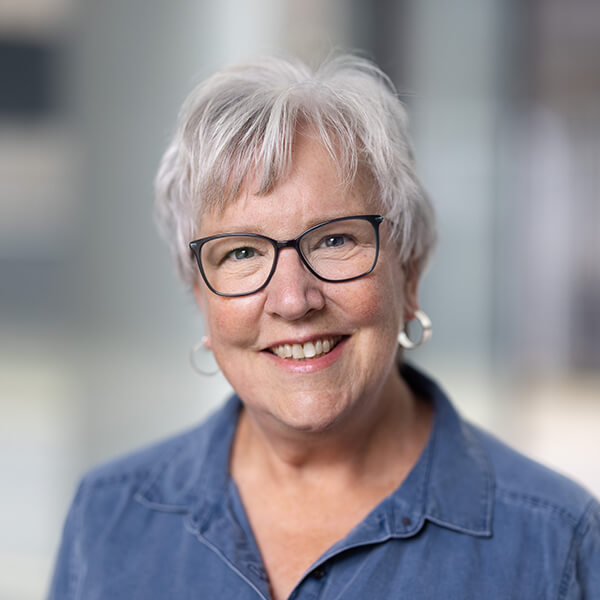
Stephanie Black
Stephanie is a Serge missionary seminary professor who has spent much of her adult life as a ‘global nomad’: 4 years in England for PhD studies, 8 years teaching in Ethiopia, 5 years teaching in Kenya, overlapped with travel all over Africa as continental accreditation officer for the Association of Evangelicals in Africa's theological education agency, plus back and forth to India since 2005. She’s also Affiliate Associate Professor of NT at Fuller Theological Seminary, and serves as Associate Director for Orientation and Training with Theologians Without Borders. After being based with Serge’s team in Dublin, Ireland, from 2017-2021, she returned to Nairobi, Kenya, in 2022 and thoroughly loves living there. Stephanie’s a proud nana to 6 grandchildren. She relaxes by drinking endless cups of tea, re-reading her favorite Jane Austen novels, or riding her bike.
THE HOST
Jim Lovelady
Jim Lovelady is a Texas-born pastor, musician, and liturgist, doing ministry in Philadelphia with his wife, Lori, and 3 kids, Lucia, Ephram, and Talitha. He is passionate about the ministry of liberating religious people from the anxieties of religion and liberating secular people from the anxieties of secularism through the story of the gospel.